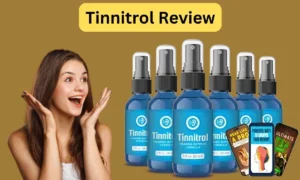
Tinnitus can involve ringing, buzzing, hissing, or other sounds without an external source. Tinnitrol is promoted online as a natural liquid supplement intended to support hearing and auditory wellness. This 2026 review examines the available Tinnitrol ingredients, claimed benefits, directions, safety information, customer feedback, pricing, and evidence. The main limitation is transparency: the sources reviewed identify several ingredients but do not provide a complete, independently verified Supplement Facts panel with exact amounts. The product claims should therefore be separated from established evidence about tinnitus and individual nutrients.

Quick Answer
Is Tinnitrol worth considering?
Tinnitrol is a liquid dietary supplement marketed for hearing, auditory, cognitive, and general nervous-system wellness. Available product information lists ingredients such as Alpha-GPC, GABA, L-Arginine, L-Tyrosine, Mucuna pruriens, Ginkgo biloba, garlic extract, zinc, magnesium, vitamin B12, and Moomiyo or shilajit. However, exact ingredient amounts and independent clinical evidence for the finished product are not clearly disclosed. Some retailer reviews are mixed, so Tinnitrol may be worth investigating as a supplement, but it should not be treated as a proven tinnitus treatment or a substitute for medical evaluation.
Quick Overview
| Feature Details | Information |
|---|---|
| Product | Tinnitrol |
| Category | Health and wellness dietary supplement |
| Product Type | Liquid drops or oral spray, depending on the listing |
| Main Purpose | Marketed for hearing, auditory, cognitive, and general nervous-system support |
| Key Ingredients | Reportedly includes Alpha-GPC, GABA, L-Arginine, L-Tyrosine, Mucuna pruriens, Ginkgo biloba, garlic extract, zinc, magnesium, vitamin B12, and Moomiyo or shilajit |
| How To Use | One product listing states six sprays daily: two in the morning and four before bedtime; verify the current label before use |
| Availability | Listings appear on product websites, Amazon, and other retail pages; the official seller and authorized distribution network are not independently verified |
| Money-Back Guarantee | A 90-day guarantee is stated on one retailer page, but this policy was not independently verified for every seller or package |
| Evidence Status | No independent clinical trial of the finished Tinnitrol product was identified in the supplied research |
Tinnitrol Product Overview
What Is Tinnitrol?
Tinnitrol is a dietary supplement marketed toward adults seeking support for hearing, auditory comfort, cognitive function, and general wellness. It is sold in liquid formats, described variously as drops or an oral spray.
Product pages position Tinnitrol as a formula containing amino acids, botanical extracts, nutrients, and compounds associated with nervous-system or circulation-related functions. These are product-positioning statements rather than proof that Tinnitrol treats tinnitus or restores hearing.
The available listings are not fully consistent. Different pages identify different sellers, package sizes, formats, and brand labels. Confirm the seller, seal, serving instructions, and Supplement Facts panel before ordering.
- Tinnitrol is a supplement, not a prescription medicine.
- The product is marketed for support rather than established treatment of a diagnosed ear condition.
- The exact current formula should be checked on the bottle because online descriptions may differ.
Who Is Tinnitrol For?
Tinnitrol may appeal to adults interested in a liquid supplement for general hearing or auditory wellness. It may also attract people looking for nutritional support related to focus, relaxation, or circulation.
It is not appropriate to assume that every case of ringing ears has the same cause. Tinnitus can be associated with hearing loss, loud-noise exposure, medication effects, earwax, jaw or neck problems, stress, and other medical issues. A supplement cannot identify the cause.
Anyone with sudden hearing loss, one-sided tinnitus, pulsating tinnitus, severe dizziness, ear pain, discharge, neurological symptoms, or rapidly worsening symptoms should seek prompt medical care rather than relying on an online supplement.
- Potentially relevant to adults seeking general auditory wellness support.
- Not a replacement for hearing testing or professional diagnosis.
- People who are pregnant, breastfeeding, taking medication, or managing a chronic condition should ask a healthcare professional before use.
What Are the Main Benefits?
The advertised Tinnitrol benefits include support for hearing health, auditory comfort, cognitive function, calmness, circulation, and general wellness. Some product pages also suggest that the formula may help reduce the perceived burden of ringing or buzzing.
Those statements describe intended uses and marketing claims. They do not demonstrate that the finished product produces those outcomes. The American Tinnitus Association notes that no dietary supplement has been approved by the FDA to treat tinnitus and discusses the limited or conflicting evidence for commonly marketed supplement ingredients.
A realistic expectation is that results, if any, may vary considerably. There is no reliable basis in the supplied research for promising a specific degree of improvement, a fixed timeline, or a Tinnitrol before-and-after result.
- Auditory and hearing wellness support is the central marketing claim.
- Cognitive and focus support is associated with ingredients such as Alpha-GPC and L-Tyrosine.
- Relaxation or stress support is associated with GABA in the product description.
- Circulation-related support is associated with L-Arginine, garlic, and Ginkgo biloba.
- These potential ingredient roles should not be confused with proven effects from the complete Tinnitrol formula.
Key Ingredients / Formula
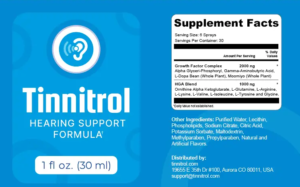
The supplied product information identifies several Tinnitrol ingredients, but the exact quantities, standardization details, and complete current Supplement Facts panel are not clearly disclosed in the sources reviewed. For that reason, it is not possible to assess whether each ingredient is present at a studied or clinically meaningful amount.
The formula descriptions also vary between pages. One product page lists Alpha-GPC, GABA, L-Arginine, L-Tyrosine, L-Dopa Bean or Mucuna pruriens, Ginkgo biloba, garlic extract, Moomiyo or shilajit, zinc, magnesium, and vitamin B12. These details should be checked against the label of the specific bottle being purchased.
- Exact dosages are not clearly disclosed in the supplied research.
- Individual-ingredient research does not establish that the finished product works.
- The presence of an ingredient does not prove that it is suitable for every person.
How Does Tinnitrol Work?
According to product descriptions, Tinnitrol is intended to work through several proposed pathways: supporting circulation, supplying nutrients involved in nervous-system function, promoting relaxation, and supporting auditory wellness.
L-Arginine is described as a nitric-oxide precursor, while GABA is associated with inhibitory signaling and relaxation. Alpha-GPC contributes choline, and L-Tyrosine is involved in the production of certain neurotransmitter compounds. Ginkgo biloba and garlic are included as botanical ingredients commonly marketed for circulation or cognitive wellness.
This explanation is theoretical and ingredient-based. It does not prove that Tinnitrol corrects an underlying cause of tinnitus, reduces neural activity responsible for tinnitus, or protects hearing. The American Tinnitus Association reports that research on supplements for tinnitus is limited and that results for ingredients such as Ginkgo biloba have been conflicting.
- Proposed mechanism: nutritional and botanical support for auditory and nervous-system wellness.
- Evidence limitation: no independent clinical trial of the complete Tinnitrol formula was identified.
- A supplement should not be described as targeting the root cause unless that claim is supported by product-specific evidence.
How To Use Tinnitrol
One available product listing states a daily serving of six sprays, divided into two sprays in the morning and four sprays before bedtime. It describes the liquid as being sprayed under the tongue, held briefly, and then swallowed.
Because Tinnitrol appears in multiple formats and package listings, the bottle label should take priority over third-party descriptions. Do not increase the serving to try to accelerate Tinnitrol results, and do not use a dropper or spray product interchangeably without confirming the serving instructions.
- Read the current bottle label before the first use.
- Follow the stated serving size rather than guessing a dosage.
- If the product is a spray, confirm whether it is intended for oral use and not placement inside the ear.
- Ask a pharmacist or clinician about timing if you take prescription medication.
Tinnitrol Pros and Cons
Tinnitrol has some practical features, including a liquid format and a multi-ingredient approach. However, the principal disadvantages are limited transparency, inconsistent online product information, and a lack of product-specific clinical evidence.
- Pros: liquid format may be convenient for people who dislike capsules.
- Pros: formula includes several nutrients and botanicals commonly used in wellness products.
- Pros: available product information provides at least a partial ingredient list.
- Cons: exact ingredient amounts are not clearly disclosed in the supplied sources.
- Cons: product listings show different sellers, formats, ratings, and package descriptions.
- Cons: independent evidence for Tinnitrol itself was not identified.
- Cons: supplement claims should not be treated as proof of tinnitus treatment or hearing restoration.
Safety and Side Effects
Tinnitrol side effects cannot be predicted confidently without the exact formula and ingredient amounts. Possible effects may include digestive upset, headache, dizziness, or sensitivity to one of the botanical or nutrient ingredients, but a complete product-specific safety profile was not found.
Ginkgo biloba may be unsuitable for people with bleeding disorders or seizure conditions and can interact with medicines. Garlic and Ginkgo may also affect bleeding risk. L-Arginine can interact with some blood-pressure or cardiovascular medicines. Mucuna pruriens may affect neurotransmitter pathways and deserves particular caution when combined with medicines affecting dopamine or the nervous system.
The product website claims that Tinnitrol is made in the United States and produced in an FDA-certified or GMP-certified facility. Those claims were not independently verified from an authoritative certification record in the supplied research. They should not be interpreted as FDA approval of Tinnitrol for treating tinnitus.
- Do not use Tinnitrol in place of evaluation for sudden, severe, or unexplained hearing symptoms.
- Consult a healthcare professional before use if you take anticoagulants, blood-pressure medicine, antidepressants, neurological medication, or diabetes medication.
- Avoid combining multiple products containing Ginkgo, garlic, zinc, magnesium, or vitamin B12 without checking total intake.
- Stop use and seek advice if you experience an allergic reaction, severe dizziness, unusual bleeding, palpitations, or worsening symptoms.
- Keep the product away from children and follow storage instructions on the label.
Tinnitrol Reviews
The available Tinnitrol customer reviews are limited and inconsistent. An Amazon listing for a three-pack showed a 3.2 out of 5 rating from eight ratings, while another listing for a one-month bottle showed 2.9 out of 5 from six ratings. These small samples are not enough to establish effectiveness.
The official product page displays highly positive testimonials describing better hearing support, clearer thinking, relaxation, and improved sleep. Because these testimonials appear on a promotional page and their purchase history and clinical details were not independently verified, they should be treated as marketing claims rather than confirmed evidence.
No reliable set of independently verified Tinnitrol before-and-after records was identified. Buyers should look for a complete label, seller identity, return terms, batch information, and reviews tied to the exact product variant.
- Positive promotional feedback focuses on hearing support, mental clarity, relaxation, and sleep.
- Retailer ratings in the supplied research are mixed and based on small numbers of ratings.
- Independent customer evidence is currently too limited to confirm consistent Tinnitrol real results.
Does Tinnitrol Work?
There is not enough independent evidence to conclude that Tinnitrol reliably works for tinnitus. The supplied research did not identify a controlled clinical trial of the finished product, and the exact amounts of several ingredients are not clearly disclosed.
Some individual ingredients have plausible nutritional or physiological roles, but that is not the same as proving that a combination product reduces tinnitus. The American Tinnitus Association states that no dietary supplements are FDA-approved to treat tinnitus and describes the evidence for commonly used supplements as limited or conflicting.
Tinnitrol may be considered an optional wellness product by an adult who understands the uncertainty and checks the ingredients with a clinician. It should not be presented as a cure, a guaranteed solution, or a substitute for hearing assessment, treatment of earwax or hearing loss, sound therapy, counseling, or other professional care when appropriate.
- Verdict on effectiveness: unproven for the finished product.
- Evidence quality: low for Tinnitrol specifically because product-specific clinical research was not identified.
- Expected results: unpredictable and likely to vary by person and underlying cause.
- A lack of improvement should not delay medical evaluation.
Pricing and Where To Buy
Tinnitrol pricing varies by format, seller, and package size. A retailer page supplied for this review displayed a spray at $109, discounted to $79. That price was not independently verified as the current official Tinnitrol price and may apply only to a specific seller or promotion.
Amazon listings show different package descriptions and sellers, but the supplied pages did not provide a stable current price. The safest approach when attempting to buy Tinnitrol online is to compare the exact bottle size, serving count, seller identity, shipping terms, return policy, and expiration information.
Several domains present themselves as a Tinnitrol official website or official site. The supplied research does not establish which domain is the authorized manufacturer or distributor. Before purchasing, confirm that the checkout page uses secure payment, clearly identifies the seller, provides customer service contact information, and states the applicable refund policy.
- Observed price reference: $79 sale price from one retailer page, with $109 shown as the regular price; not independently verified as current.
- Availability: product listings appeared on Amazon and other retail or promotional websites.
- Discounts and special offers should be checked at checkout because they may change.
- Avoid assuming that every site using the Tinnitrol name is an authorized source.
Tinnitrol Comparison
Compared with a single-ingredient supplement, Tinnitrol uses a broader combination of amino acids, botanicals, and nutrients. That may appeal to shoppers seeking an all-in-one formula, but it also makes it harder to determine which ingredient is responsible for an effect or side effect.
Compared with evidence-based tinnitus support, Tinnitrol has less product-specific evidence in the supplied research. A hearing evaluation can help identify hearing loss, earwax, medication effects, or other contributors, while tinnitus management may involve sound-based strategies, counseling, hearing aids, or treatment of an underlying condition.
- Tinnitrol versus single-ingredient products: broader formula, but less ability to isolate effects.
- Tinnitrol versus professional evaluation: a supplement cannot diagnose the cause of tinnitus.
- Tinnitrol versus proven management approaches: product-specific evidence is currently weaker or unavailable.
Evidence Status: What Is Verified and What Is Not?
Verified from the supplied pages: Tinnitrol is marketed as a liquid hearing and wellness supplement; some retail pages list mixed customer ratings; and several online descriptions identify a group of ingredients.
Not independently verified: the identity of the manufacturer, exact ingredient quantities, current formula consistency across products, FDA approval, GMP certification, the accuracy of promotional testimonials, and the effectiveness of Tinnitrol for tinnitus.
The most important evidence gap is the absence of an identified, independently published clinical trial testing the complete Tinnitrol formula. Studies of individual ingredients, even when available, cannot automatically be applied to the finished product.
- Product claims and independent evidence are not equivalent.
- A natural or plant-based label does not guarantee safety or effectiveness.
- A retailer listing does not establish clinical approval or product quality.
Key Ingredients
| Ingredient | Purpose / Role | Evidence Status |
|---|---|---|
| Alpha-GPC | A choline-containing compound associated with acetylcholine and general cognitive or nervous-system wellness. | Listed in product descriptions. The amount in Tinnitrol and its effect on tinnitus are not clearly disclosed or independently verified. |
| GABA | A neurotransmitter involved in inhibitory signaling and often associated with relaxation support. | Listed in product descriptions. This does not establish that oral GABA in Tinnitrol reduces tinnitus. |
| L-Arginine | An amino acid involved in nitric-oxide production and normal metabolic processes. | Listed as part of the circulation-oriented formula. The Tinnitrol dose and product-specific clinical benefit are not clearly disclosed. |
| L-Tyrosine | An amino acid used in the production of certain neurotransmitter compounds. | Reported in the formula descriptions. Evidence that it improves tinnitus through Tinnitrol was not identified. |
| L-Dopa Bean or Mucuna pruriens | A botanical source that may contain naturally occurring L-DOPA, a dopamine precursor. | Reported in the product information, but standardization, amount, and safety profile in Tinnitrol are not clearly disclosed. |
| Ginkgo biloba | A botanical commonly marketed for cognitive and circulation-related wellness. | The American Tinnitus Association describes conflicting research for Ginkgo in tinnitus and notes relevant safety concerns. Tinnitrol-specific evidence was not identified. |
| Garlic extract | A botanical commonly used in cardiovascular and general wellness products. | Listed in one product description. Its effect on tinnitus in Tinnitrol has not been established. |
| Moomiyo or Shilajit | A mineral-rich substance marketed in some supplements for general vitality and wellness. | Reported in product information, but the identity, purification, amount, and quality testing for the Tinnitrol product are not clearly disclosed. |
| Zinc | An essential mineral involved in normal cellular, immune, and neurological functions. | The American Tinnitus Association reports that zinc supplementation was not more effective than placebo in one study of older adults, although deficient subgroups may differ. |
| Magnesium | An essential mineral involved in muscle, nerve, and metabolic functions. | Reported in the formula description. Evidence for magnesium as a reliable tinnitus treatment is not established. |
| Vitamin B12 | A vitamin involved in neurological and blood-cell functions. | Included in the reported formula. Supplementation may be relevant when deficiency exists, but this does not prove a general tinnitus benefit. |
Main Benefits
Auditory wellness support
Tinnitrol is marketed to support general hearing and auditory comfort, but a product-specific clinical benefit has not been independently established.
Support for cognitive wellness
Ingredients such as Alpha-GPC and L-Tyrosine are associated with cognitive or neurotransmitter-related functions. The finished product has not been proven to improve memory or focus.
Relaxation and stress support
The inclusion of GABA reflects a marketing focus on calmness and nervous-system wellness. It should not be treated as a proven method for reducing tinnitus-related distress.
Nutrient support
Zinc, magnesium, and vitamin B12 provide nutrients involved in normal physiological functions. Benefits are more plausible when a person has a relevant deficiency, but individual needs vary.
Liquid delivery format
A spray or drop format may be convenient for people who have difficulty swallowing capsules. The exact delivery format should be confirmed on the package.
Pros and Cons
Potential Pros
- Liquid format may be convenient.
- The reported formula includes a range of nutrients, amino acids, and botanicals.
- Some product pages provide general serving guidance.
- The product is widely marketed online, making it relatively easy to investigate.
Potential Cons
- No independent clinical trial of the finished Tinnitrol formula was identified.
- Exact ingredient quantities and standardization details are not clearly disclosed.
- Online listings vary in seller, brand label, package size, and format.
- Customer ratings available in the supplied research are limited and mixed.
- FDA approval for treating tinnitus should not be inferred.
- The manufacturer and official distribution source were not independently verified.
How To Use Tinnitrol
- Check the current bottle label and confirm that the product is intended for oral use.
- One available listing states six sprays daily: two in the morning and four before bedtime.
- If using a spray, follow the listed instructions about placing the liquid under the tongue and holding it briefly before swallowing.
- Do not exceed the label serving or combine it with similar supplements without professional advice.
- Record any changes or adverse effects and stop use if concerning symptoms occur.
Always follow the current product label and official instructions.
If the label differs from information found elsewhere online,
the current label should take priority.
Safety and Side Effects
| Safety Consideration | What Readers Should Know |
|---|---|
| Medical evaluation | Seek medical advice for sudden hearing loss, one-sided or pulsating tinnitus, severe dizziness, ear pain, discharge, neurological symptoms, or rapidly worsening symptoms. |
| Medication interactions | Ginkgo biloba, garlic, L-Arginine, and Mucuna pruriens may be relevant to medication interactions. Ask a pharmacist or clinician before use if taking blood thinners, blood-pressure medicine, antidepressants, or neurological medication. |
| Bleeding and seizure concerns | The American Tinnitus Association specifically notes that people with seizures or bleeding disorders should not use Ginkgo biloba without appropriate medical guidance. |
| Pregnancy and breastfeeding | Safety has not been established for the complete Tinnitrol formula during pregnancy or breastfeeding. Avoid use unless a qualified healthcare professional advises it. |
| Unknown quantities | Because exact amounts are not clearly disclosed in the supplied research, it is difficult to assess total intake, interactions, or the likelihood of dose-related side effects. |
| Quality and certification claims | Claims about FDA-certified facilities, GMP certification, or U.S. manufacturing were not independently verified from authoritative records. FDA facility registration or certification would not mean that the supplement is FDA-approved to treat tinnitus. |
Tinnitrol Reviews
Online opinions can be useful for understanding common experiences,
but testimonials are not the same as controlled scientific evidence.
The following review section reflects the research collected for this article
and does not invent customer identities or purchase claims.
What positive feedback appears to focus on
Promotional testimonials on the Tinnitrol product website describe hearing support, clearer thinking, relaxation, and better sleep. These statements are attributed to the seller’s page, and the individuals and purchase status were not independently verified.
Source: Tinnitrol product website
What limitations or mixed feedback appears
The supplied Amazon pages show mixed ratings: one three-pack listing displayed 3.2 out of 5 from eight ratings, while another one-bottle listing displayed 2.9 out of 5 from six ratings. These small samples do not establish whether Tinnitrol works consistently.
Source: Amazon product listings
What prospective buyers should verify
Before purchasing, verify the exact product format, complete Supplement Facts panel, serving size, seller identity, expiration date, shipping terms, and refund policy. Multiple websites use the Tinnitrol name, and the authorized official site was not independently established in the supplied research.
Source: Review of supplied product and retailer pages
Does Tinnitrol Work?
Tinnitrol is a multi-ingredient liquid supplement marketed for hearing and tinnitus-related wellness, but the evidence remains insufficient to say that it works reliably. Its reported ingredients have plausible nutritional or physiological roles, yet exact amounts, product-specific testing, manufacturer information, and independent clinical results are not clearly available. Mixed retailer ratings further support a cautious approach. Tinnitrol may be worth investigating only as an optional supplement after checking the label and discussing safety with a healthcare professional. It should not replace hearing evaluation or evidence-based tinnitus management, and buyers should verify the official seller, price, refund terms, and current formula before purchasing.
Tinnitrol Pricing and Where To Buy
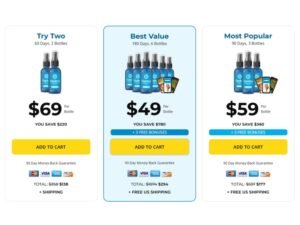
Tinnitrol pricing is not consistent across the supplied sources. One retailer page displayed a $109 price reduced to $79 for a spray product, but this was not independently verified as the current official price. Amazon listings did not provide a stable price in the accessible content.
Price information: Observed reference: $79 sale price and $109 listed price on one retailer page; current official pricing is not clearly verified.
Availability: Tinnitrol appears through Amazon, retailer pages, and several promotional websites. To buy Tinnitrol online, compare the exact variant and confirm seller credentials, shipping, returns, and label information.

Frequently Asked Questions
What is Tinnitrol?
Tinnitrol is a liquid dietary supplement marketed for hearing, auditory, cognitive, and general nervous-system wellness. It is not an FDA-approved treatment for tinnitus.
Does Tinnitrol work for tinnitus?
It has not been established that Tinnitrol reliably works for tinnitus. No independent clinical trial of the complete formula was identified in the supplied research, and exact ingredient amounts are not clearly disclosed.
What are the main Tinnitrol ingredients?
Available product descriptions list Alpha-GPC, GABA, L-Arginine, L-Tyrosine, Mucuna pruriens or L-Dopa Bean, Ginkgo biloba, garlic extract, Moomiyo or shilajit, zinc, magnesium, and vitamin B12. The list and amounts should be confirmed on the current bottle.
What is the Tinnitrol dosage?
One retailer listing states six sprays per day, divided into two sprays in the morning and four before bedtime. Because product formats may differ, follow the label for the exact bottle purchased.
What are the possible Tinnitrol side effects?
A complete product-specific side-effect profile is not available. Possible concerns depend on the ingredients and may include digestive upset, dizziness, headache, allergic reactions, bleeding risk, or medication interactions.
Is Tinnitrol safe?
Safety cannot be confirmed for every person because the full formula, amounts, and quality documentation are not clearly disclosed. Consult a healthcare professional before use if you have a medical condition, take medication, are pregnant, or are breastfeeding.
Where can I buy Tinnitrol?
Listings appear on Amazon, retailer websites, and several sites presenting themselves as official. The authorized official seller was not independently verified, so check seller identity, label details, shipping, and refund terms before ordering.
How much does Tinnitrol cost?
One supplied retailer page displayed $79 on sale from a listed $109 price. This may apply to one product variant and is not independently verified as the current official Tinnitrol price.
Is Tinnitrol a scam or legit?
The available evidence does not establish that Tinnitrol is a scam, but it also does not prove that it is an effective tinnitus treatment. The main concerns are limited clinical evidence, incomplete label transparency, mixed retailer ratings, and uncertainty about the authorized seller.
Are there real Tinnitrol before-and-after results?
No independently verified set of Tinnitrol before-and-after results was identified. Promotional testimonials should be treated as marketing statements rather than clinical evidence.
Can Tinnitrol restore hearing?
There is no reliable evidence in the supplied research that Tinnitrol restores hearing. Hearing changes should be assessed by a qualified healthcare professional.
How long does Tinnitrol take to work?
A dependable timeframe has not been established. Claims about a specific number of weeks are not supported by an identified clinical trial of the finished product.
Final Offer

Final Verdict
Tinnitrol is a multi-ingredient liquid supplement marketed for hearing and tinnitus-related wellness, but the evidence remains insufficient to say that it works reliably. Its reported ingredients have plausible nutritional or physiological roles, yet exact amounts, product-specific testing, manufacturer information, and independent clinical results are not clearly available. Mixed retailer ratings further support a cautious approach. Tinnitrol may be worth investigating only as an optional supplement after checking the label and discussing safety with a healthcare professional. It should not replace hearing evaluation or evidence-based tinnitus management, and buyers should verify the official seller, price, refund terms, and current formula before purchasing.
Research Sources
American Tinnitus Association: Is There a Magic Pill?
— Used for independent context on dietary supplements, tinnitus evidence, FDA approval, Ginkgo biloba, zinc, and supplement limitations.
Tinnitrol Official Product Page
— Used to identify the product’s marketing claims, reported formula, directions, testimonials, and certification statements. Claims were not independently verified.
Tinnitrol Spray Product Listing
— Used for the reported spray format, six-spray serving instruction, partial ingredient list, and observed pricing. Retailer information was not treated as proof of efficacy.
Amazon Tinnitrol Tinnitus Drops Listing
— Used for product listing details and the displayed 3.2 out of 5 rating from eight ratings.
Amazon Original Tinnitrol Hearing Support Listing
— Used to show that another listing has a different seller, package description, and displayed 2.9 out of 5 rating from six ratings.
Pharmacological Treatments for Tinnitus
— Used for general medical context that tinnitus is complex and that no single drug or supplement is likely to work for every person.
Why Most Over-the-Counter Tinnitus Treatments Do Not Work
— Used as supplementary clinical-practice context on the limitations of over-the-counter tinnitus products and the importance of identifying individual causes.
Important:
This article is for informational and consumer-research purposes.
Product claims, pricing, ingredients, availability and policies can change.
Always verify current information on the manufacturer’s or seller’s
official page before purchasing. Individual results can vary.