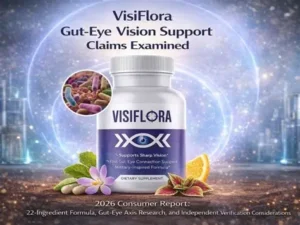
VisiFlora has attracted attention because it combines familiar eye-health nutrients such as lutein and zeaxanthin with botanicals, antioxidants, and a marketing concept called the gut-eye connection. This VisiFlora review examines what can reasonably be confirmed from the supplied product materials and third-party coverage. It separates product claims from evidence, avoids treating ingredient research as proof of finished-product results, and highlights practical questions about safety, dosage, pricing, and value.

Quick Answer
Is VisiFlora worth considering?
VisiFlora is a daily vision-support dietary supplement marketed as a broad, multi-ingredient formula containing carotenoids, vitamins, minerals, botanicals, and other nutrients. Its ingredients have varying levels of ingredient-specific research, but there is no independently verified clinical trial showing that the finished VisiFlora formula treats eye disease or guarantees clearer vision. The main limitation is incomplete dose transparency: the product is promoted as 22-in-1, while the publicly listed ingredient names appear to total 21. Buyers should verify the current Supplement Facts panel, price, refund terms, and checkout details before ordering.
Quick Overview
| Feature Details | Information |
|---|---|
| Product | VisiFlora |
| Category | Vision-support dietary supplement |
| Product Type | Once-daily capsule marketed for adults |
| Main Purpose | General eye wellness, visual comfort, antioxidant nutrition, and macular-pigment support |
| Key Ingredients | Lutein, zeaxanthin, astaxanthin, lycopene, vitamins, minerals, botanicals, taurine, and alpha lipoic acid |
| How To Use | The current product information describes one capsule daily with food; confirm the label before use |
| Availability | Primarily sold online through the current VisiFlora sales or checkout path; availability through Amazon appears inconsistent and is not treated as the primary source |
| Money-Back Guarantee | A 60-day guarantee is advertised in supplied product materials, but current checkout terms should be verified before purchase |
| Evidence Status | Ingredient-level and pathway research exists, but finished-product clinical effectiveness has not been independently verified |
VisiFlora Product Overview
What Is VisiFlora?
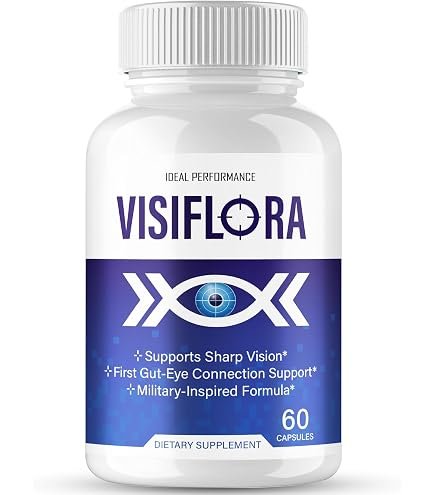
VisiFlora is a vision-support dietary supplement positioned for adults who want nutritional support for everyday eye wellness, visual comfort, and healthy aging. It is marketed as a multi-ingredient capsule rather than as a prescription medicine or eye treatment.
The product is promoted around a broad formula containing carotenoids, antioxidant vitamins, minerals, botanical extracts, polyphenols, and additional nutrients. Its marketing also emphasizes the gut-eye connection, referring to research into possible relationships between gut health, inflammation, and ocular health.
That positioning should be interpreted carefully. A plausible biological pathway does not establish that VisiFlora itself prevents, treats, or reverses glaucoma, cataracts, macular degeneration, diabetic eye disease, or other diagnosed conditions.
- VisiFlora is a supplement, not a replacement for an eye examination.
- The product claims are primarily nutritional-support claims.
- The formula is marketed as 22-in-1, but the supplied ingredient pages do not clearly reconcile that number with the individually named ingredients.
Who Is VisiFlora For?
VisiFlora may appeal to adults interested in a convenient daily eye-wellness routine, particularly people with screen-heavy work, an interest in antioxidant nutrition, or a preference for combining several ingredients in one capsule.
It may also interest shoppers comparing lutein-and-zeaxanthin products with broader formulas that include botanicals and nutrients associated with gut-eye wellness. However, it is not appropriate to view the product as a substitute for professional care when symptoms or an eye condition are present.
People with diagnosed eye disease, allergies, medication use, pregnancy, upcoming surgery, or concerns about supplement interactions should ask a qualified healthcare professional before using it.
- Potentially relevant for adults seeking general eye-wellness nutrition
- May suit people who prefer a multi-ingredient formula
- Not suitable as a self-treatment for sudden vision changes, eye pain, flashes, severe redness, or diagnosed eye disease
- People comparing formulas should check doses, not only the number of listed ingredients
What Are the Main Benefits?
The main advertised VisiFlora benefits are support for everyday eye wellness, visual comfort, macular-pigment nutrition, antioxidant defenses, screen-heavy routines, and healthy-aging nutrition. These are best understood as possible areas of nutritional support rather than guaranteed outcomes.
Lutein and zeaxanthin are commonly included in eye-health formulas because they are carotenoids found in the macula. Vitamins, minerals, and plant compounds are included for broader antioxidant and nutritional context. Some product materials also associate bilberry and vitamin A with low-light visual support, although that should not be interpreted as a promise of improved night driving.
The product website specifically cautions that VisiFlora is not intended to diagnose, treat, cure, or prevent disease. Results can vary according to diet, age, screen habits, sleep, blood sugar, blood pressure, existing conditions, and medication use.
- General eye-wellness support
- Visual comfort support during ordinary daily demands
- Macular-pigment nutrition through carotenoids
- Antioxidant nutrition
- Support that may complement healthy screen habits
- Broader healthy-aging eye nutrition
How Does VisiFlora Work?
VisiFlora is intended to work through nutritional support rather than through a drug-like mechanism. The formula combines carotenoids and antioxidant nutrients that are commonly discussed in relation to eye tissues, along with botanicals and other compounds intended to support general wellness.
Lutein and zeaxanthin are associated with macular pigment. Antioxidant nutrients such as vitamins C and E, selenium, astaxanthin, lycopene, and polyphenols are included to support normal antioxidant defenses. Minerals such as zinc and copper contribute to normal physiological processes relevant to nutrition.
The gut-eye concept is based on an emerging research area examining possible relationships among gut microbiota, intestinal barrier function, inflammation, and eye health. The supplied USA Today press-release material cites peer-reviewed research in this area, but also acknowledges that there is no whole-formula clinical trial confirming that VisiFlora produces specific vision outcomes.
Therefore, the most accurate answer to how VisiFlora works is that it supplies a mixture of nutrients associated with eye and general antioxidant nutrition. Whether the complete product delivers meaningful clinical results remains independently unverified.
- Ingredient-level research is not the same as a clinical trial of VisiFlora.
- The gut-eye connection is a research concept, not proof that the formula treats inflammation or eye disease.
- The product should be combined with regular eye care, appropriate eyewear, screen breaks, adequate lighting, sleep, and a balanced diet.
VisiFlora Comparison
Compared with a simple lutein-and-zeaxanthin supplement, VisiFlora offers a broader formula with additional vitamins, minerals, antioxidants, and botanicals. That may be convenient, but a longer ingredient list does not automatically mean better effectiveness.
Compared with AREDS2-based products, VisiFlora should not be assumed to be equivalent. AREDS2 research used specific nutrient combinations and doses for particular populations at risk of progression from certain forms of age-related macular degeneration. VisiFlora’s individual ingredient amounts are not clearly disclosed in the supplied pages, so dose equivalence cannot be independently confirmed.
A single- or limited-ingredient product can make it easier to evaluate dose, tolerability, and overlap with other supplements. VisiFlora may be more appealing to shoppers who prefer convenience, but its value depends on the transparency and appropriateness of the current label.
- VisiFlora versus a basic carotenoid formula: broader ingredient range, but more dose and interaction questions
- VisiFlora versus AREDS2: not demonstrated to be equivalent
- VisiFlora versus separate supplements: potentially more convenient, but less flexible for personalized dosing
- The best comparison is based on transparent doses, evidence, safety, and total cost rather than ingredient count alone
Does VisiFlora Work?
There is not enough independently verified evidence to conclude that VisiFlora reliably improves vision or produces specific VisiFlora results for every user. Some of its individual ingredients have relevant nutrition or eye-health research, but that does not prove that the finished formula has been clinically tested or that it will produce a noticeable change.
The supplied research includes positive marketing summaries and favorable statements from review pages, but several of those pages appear promotional or affiliate-oriented. They should not be treated as independent clinical evidence. One supplied press-release source explicitly states that the gut-eye mechanism is supported by research while noting the absence of a whole-formula clinical trial.
A realistic expectation is that any benefit, if experienced, may be gradual and subtle rather than a dramatic restoration of eyesight. A supplement should not be used to delay an eye examination or medical evaluation.
- What is supported: several ingredients have plausible nutritional roles and some ingredient-level research.
- What is not established: that the complete VisiFlora formula improves vision, reverses eye disease, or delivers guaranteed results.
- What buyers should measure: comfort during screen use, tolerability, consistency, and whether a healthcare professional considers the formula appropriate.
VisiFlora Ingredients and Formula
The supplied product pages describe VisiFlora as a 22-in-1 formula. However, the publicly named ingredients available in the research appear to total 21 individual entries. This may reflect a labeling or counting difference, but it should be clarified by checking the current Supplement Facts panel.
The ingredient amounts are especially important. Without the dose of each carotenoid, vitamin, mineral, and botanical, it is not possible to determine whether VisiFlora matches the amounts used in particular studies or whether overlapping nutrients could become excessive when combined with other supplements.
The following list summarizes the ingredients named in the supplied sources. It does not confirm that the current formula has not changed.
- Carotenoids: lutein, zeaxanthin, astaxanthin, and lycopene
- Vitamins and minerals: vitamin A or beta carotene, vitamin C, vitamin E, zinc, copper, selenium, and chromium
- Botanicals and polyphenols: bilberry, saffron, ginkgo biloba, grape seed extract, rutin, quercetin, eyebright, and coleus forskohlii
- Additional nutrients: taurine and alpha lipoic acid
How To Use VisiFlora
The current product information describes VisiFlora as one capsule daily with food. Because supplement directions and formulas can change, users should follow the serving instructions printed on the bottle or shown at the current official checkout.
Do not exceed the suggested serving unless a qualified healthcare professional advises otherwise. Taking the capsule with food may be practical for routine consistency and may be relevant for nutrients that are better tolerated or absorbed with a meal.
Before starting, compare the label with other eye supplements, multivitamins, and antioxidant products to identify overlapping ingredients. Keep a record of the start date and any unusual symptoms rather than assuming every change is a product result.
- Check the current label and serving size.
- The supplied instructions describe one capsule daily with food.
- Do not double the serving to pursue faster results.
- Review overlapping ingredients in other supplements.
- Use consistently for a reasonable evaluation period, but do not delay professional care.
VisiFlora Pros and Cons
VisiFlora has some practical advantages, particularly for shoppers who want a broad eye-wellness formula in one product. Its limitations mainly concern evidence, dose transparency, marketing language, and the difficulty of assessing a large blend.
- Pros: broad combination of carotenoids, antioxidants, minerals, and botanicals
- Pros: convenient capsule format
- Pros: includes familiar eye-nutrition ingredients such as lutein and zeaxanthin
- Pros: product materials provide safety disclaimers and state that it is not a disease treatment
- Cons: individual ingredient amounts are not clearly disclosed in the supplied materials
- Cons: the advertised 22-in-1 count is not clearly reconciled with the named ingredient list
- Cons: no independently verified whole-formula clinical trial was supplied
- Cons: botanical ingredients may raise interaction or tolerability questions
- Cons: online pricing and checkout terms may vary
VisiFlora Safety and Side Effects
VisiFlora safety cannot be fully assessed without a complete, current Supplement Facts panel showing ingredient amounts, standardization details, allergens, and warnings. The presence of many botanicals and minerals means that individual suitability matters.
Possible side effects from supplements of this type can include digestive upset, headache, allergic reactions, or other symptoms related to specific ingredients. The supplied sources do not provide a reliable, product-specific adverse-event rate, so claims that VisiFlora is universally gentle or risk-free are not independently verified.
Ginkgo biloba, saffron, vitamin A, zinc, copper, selenium, and other ingredients can be relevant to medication use, surgery planning, pregnancy, or medical conditions. Anyone taking anticoagulants, diabetes medication, blood-pressure medication, or other prescription drugs should seek professional advice before use.
Stop using the product and seek appropriate medical advice if concerning symptoms occur. Sudden vision loss, new flashes or floaters, severe eye pain, marked redness, or a curtain-like shadow require prompt eye care rather than self-treatment with a supplement.
- Ask a healthcare professional before use if pregnant, breastfeeding, taking medication, or managing a medical condition.
- Review the label for vitamin A, minerals, botanicals, allergens, and overlapping supplements.
- Use extra caution before surgery, particularly with products containing botanicals that may affect bleeding or medication response.
- Do not use VisiFlora to treat or postpone evaluation of an eye condition.
- Product-specific side-effect rates are not independently verified.
VisiFlora Reviews and Customer Feedback
The available review evidence is mixed in quality. Some product and affiliate pages describe positive experiences involving eye comfort, screen use, focus, or night vision, but the supplied materials do not provide independently verified customer records. The named testimonials on one sales page should therefore be treated as promotional claims rather than verified customer evidence.
An Amazon listing supplied for research shows a VisiFlora-branded listing with a 3.1 rating from four reviews, but the listing identifies the brand as IDEAL PERFORMANCE, states that the item cannot be shipped to the selected location, and does not establish that it is the same product or official sales channel discussed on the main VisiFlora website.
Because reliable, independently authenticated customer reviews are limited, prospective buyers should focus on the label, seller identity, refund policy, shipping terms, and whether the claims are realistic.
- Positive feedback appears to focus on perceived comfort, clarity, and reduced fatigue, but these reports are not independently verified.
- Mixed or limited feedback includes uncertainty about seller identity, formula details, and whether marketplace listings are official.
- Prospective buyers should verify the current Supplement Facts panel, product authenticity, checkout processor, refund procedure, and total cost before ordering.
VisiFlora Pricing and Where To Buy
The supplied press-release material reports pricing of approximately $49 to $79 per bottle depending on package size. Another supplied sales page advertises $49 per bottle and a discount claim, but promotional pricing can change and was not independently verified at the time of this review.
The safest buying route is to begin at the VisiFlora official website or official site currently associated with the product, then confirm that the checkout domain, product name, formula, bottle count, shipping charges, and refund terms match the offer. The supplied product information references an online checkout path and, where applicable, BuyGoods as an order processor; BuyGoods should not automatically be interpreted as the manufacturer.
Amazon listings appear in search results, but the supplied listing does not establish that the seller is the official source. Buyers should be cautious with marketplace offers, copied product names, and unusually large discounts.
- Reported price range: approximately $49 to $79 per bottle, subject to change
- Advertised guarantee: 60 days according to supplied product materials; verify current terms
- Check whether shipping, taxes, subscriptions, or add-ons change the final price
- Use the official product route when possible and confirm the checkout URL
- Do not rely on a discount claim unless the final order page confirms it
VisiFlora Scam or Legit?
The supplied materials do not establish that VisiFlora is a scam, but they also do not independently validate every product claim. The product has identifiable sales pages, an ingredient presentation, and online checkout information, yet the evidence base for the finished formula remains limited.
The most appropriate conclusion is that VisiFlora appears to be marketed as a real dietary supplement, while its effectiveness and value require caution. Buyers should avoid exaggerated promises such as guaranteed eyesight restoration, instant night-vision improvement, or treatment of eye disease.
A legitimate purchase decision should be based on transparent labeling, a clear seller and refund policy, reasonable claims, and professional advice where appropriate.
- Legitimacy indicators: identifiable product pages, published ingredient categories, and stated ordering terms
- Caution indicators: promotional testimonials, inconsistent marketplace information, limited dose transparency, and lack of a verified whole-formula clinical trial
- Best approach: investigate the current label and checkout terms before buying
Key Ingredients
| Ingredient | Purpose / Role | Evidence Status |
|---|---|---|
| Lutein | Carotenoid associated with macular-pigment nutrition and visual-wellness support. | Ingredient-level research supports its relevance to eye-health nutrition, but the VisiFlora dose and finished-product effect are not independently verified. |
| Zeaxanthin | Macular carotenoid commonly paired with lutein in vision-support formulas. | Relevant ingredient-level research exists, but VisiFlora dose equivalence to studied formulas cannot be confirmed. |
| Astaxanthin | Carotenoid antioxidant included for broader antioxidant and retinal-wellness context. | Ingredient research exists, but it does not prove that VisiFlora produces a specific clinical result. |
| Lycopene | Plant carotenoid included for antioxidant nutrition. | General antioxidant research is available; product-specific eye benefits are not independently verified. |
| Vitamin A or Beta Carotene | Nutrient associated with normal visual function and low-light vision biology. | Vitamin A has an established nutritional role, but the amount and form in VisiFlora should be confirmed because excess intake can be harmful. |
| Vitamin C | Water-soluble antioxidant nutrient supporting normal physiological functions. | Established nutritional role; no proof that the VisiFlora formula treats eye disease. |
| Vitamin E | Fat-soluble antioxidant included for cellular and eye-wellness nutrition. | Ingredient-level nutritional evidence exists; the VisiFlora dose and clinical outcome are not independently verified. |
| Zinc | Essential mineral involved in normal physiological and eye-related processes. | Relevant nutritional role, but dose and suitability should be assessed alongside other supplements. |
| Copper | Trace mineral included in broader nutritional and antioxidant-support context. | Nutritional role is established; excessive or unnecessary supplementation should be avoided. |
| Selenium | Trace mineral associated with antioxidant enzyme activity. | Ingredient-level nutritional evidence exists, but more is not necessarily better and the product dose is not clearly disclosed. |
| Chromium | Mineral associated with normal metabolic functions. | Its inclusion is more general-wellness oriented; a specific eye benefit from VisiFlora is not established. |
| Bilberry Extract | Botanical extract traditionally included in formulas for antioxidant and visual-wellness support. | Research and traditional use are mixed; VisiFlora-specific results are not independently verified. |
| Saffron | Botanical ingredient included in the formula’s eye-wellness and antioxidant context. | Some ingredient-level research exists, but the evidence does not establish the effectiveness of the complete VisiFlora formula. |
| Ginkgo Biloba | Botanical commonly associated with circulation and antioxidant support. | Evidence varies by use and preparation; it may interact with medications, so professional advice is important. |
| Grape Seed Extract | Polyphenol-rich botanical included for antioxidant and gut-eye wellness positioning. | General antioxidant research exists; product-specific benefits are not independently verified. |
| Rutin | Plant flavonoid included for antioxidant and vascular-wellness context. | Ingredient-level rationale exists, but clinical outcomes from the VisiFlora blend are unconfirmed. |
| Quercetin | Flavonoid included for antioxidant and general cellular-wellness support. | General research exists, but it should not be interpreted as proof of treating eye disease. |
| Eyebright | Traditional botanical associated with eye comfort and wellness formulas. | Evidence is limited compared with established nutrients, and product-specific effectiveness is not verified. |
| Coleus Forskohlii | Botanical included in the formula’s broader circulation and wellness positioning. | Evidence depends on extract and dose; medication interactions and dose transparency should be considered. |
| Taurine | A naturally occurring amino-acid-related nutrient found in body tissues, including the eyes. | Biological relevance does not establish that supplemental taurine in VisiFlora improves vision. |
| Alpha Lipoic Acid | Antioxidant compound included to support the formula’s broader antioxidant network. | Ingredient research exists in several health contexts, but finished-product eye outcomes are unconfirmed. |
Main Benefits
Everyday Eye-Wellness Support
VisiFlora is designed as a daily nutritional supplement for adults seeking general eye-wellness support, not as a treatment.
Visual Comfort
The formula is marketed for visual comfort during normal daily demands, including screen-heavy routines. Screen breaks, lighting, blinking, sleep, and hydration remain important.
Macular-Pigment Nutrition
Lutein and zeaxanthin are commonly included in eye-health formulas because of their association with macular pigment.
Antioxidant Nutrition
Carotenoids, vitamins, minerals, and plant polyphenols provide a broad antioxidant-support rationale.
Healthy-Aging Eye Nutrition
The combination of nutrients may complement a broader healthy-aging routine, although it is not proof of disease prevention.
Gut-Eye Wellness Positioning
VisiFlora uses the gut-eye connection as a product framework. This reflects an emerging research area, not proof that the supplement repairs gut health or treats ocular inflammation.
Pros and Cons
Potential Pros
- Broad formula combining carotenoids, vitamins, minerals, botanicals, and other nutrients
- Includes familiar eye-nutrition ingredients such as lutein and zeaxanthin
- Convenient capsule format
- Product materials include disclaimers against treating disease
- May appeal to adults seeking a single multi-ingredient eye-wellness product
Potential Cons
- Individual ingredient amounts are not clearly disclosed in the supplied materials
- The 22-in-1 marketing claim does not clearly match the 21 named ingredients identified in the sources
- No independently verified clinical trial of the finished VisiFlora formula was supplied
- Botanicals and minerals may create interaction or overlap concerns
- Online pricing and promotional offers can change
- Marketplace listings do not clearly establish official-seller status
- Customer testimonials and positive review claims are not independently authenticated
How To Use VisiFlora
- Review the current bottle label and Supplement Facts panel before starting.
- The supplied product information describes one capsule daily with food.
- Do not exceed the suggested serving unless advised by a qualified healthcare professional.
- Compare VisiFlora with other supplements to identify overlapping vitamins, minerals, carotenoids, or botanicals.
- Use consistently as directed and monitor tolerability rather than expecting instant changes.
- Continue regular eye examinations and seek prompt care for new or worsening symptoms.
Always follow the current product label and official instructions.
If the label differs from information found elsewhere online,
the current label should take priority.
Safety and Side Effects
| Safety Consideration | What Readers Should Know |
|---|---|
| Incomplete dose information | The supplied pages name many ingredients but do not clearly show every individual amount. This limits assessment of dose adequacy, interactions, and overlap with other products. |
| Medication interactions | Botanicals such as ginkgo and ingredients such as vitamin A, minerals, and saffron may be relevant to medication use. Ask a healthcare professional before combining VisiFlora with prescription or over-the-counter medicines. |
| Pregnancy, breastfeeding, and surgery | People who are pregnant, breastfeeding, preparing for surgery, or managing a medical condition should obtain professional advice before using a multi-ingredient supplement. |
| Possible side effects | Digestive upset, headache, allergic reactions, or other ingredient-related symptoms are possible, but a reliable VisiFlora-specific side-effect rate is not independently verified. |
| Eye emergencies | Sudden vision loss, severe eye pain, flashes, a sudden increase in floaters, a curtain-like shadow, or marked redness requires prompt professional evaluation and should not be self-treated with VisiFlora. |
| Disease treatment claims | VisiFlora should not be used to treat or prevent glaucoma, cataracts, macular degeneration, diabetic eye disease, retinal disease, or optic nerve disease. |
VisiFlora Reviews
Online opinions can be useful for understanding common experiences,
but testimonials are not the same as controlled scientific evidence.
The following review section reflects the research collected for this article
and does not invent customer identities or purchase claims.
What positive feedback appears to focus on
Promotional pages and some review content commonly describe perceived improvements in visual comfort, screen-related fatigue, clarity, focus, or night driving. These statements are product claims or user reports, not independently verified clinical evidence.
Source: VisiFlora sales materials and supplied review pages
What limitations or mixed feedback appears
The available evidence is limited by promotional framing, unclear dose disclosure, inconsistent ingredient counting, and uncertainty about whether marketplace listings represent the official product. An Amazon listing supplied for research showed a 3.1 rating from four reviews, but it did not establish official product identity or seller status.
Source: Amazon product listing and supplied product pages
What prospective buyers should verify
Before buying, verify the current Supplement Facts panel, serving size, product authenticity, checkout domain, shipping charges, refund conditions, subscription terms, and whether the advertised 60-day guarantee applies to the exact order.
Source: VisiFlora product information pages
Does VisiFlora Work?
VisiFlora is worth investigating for adults who want a broad eye-wellness supplement and understand that its role is nutritional support rather than medical treatment. Its formula includes several familiar ingredients, especially lutein and zeaxanthin, but the lack of clear individual doses and the absence of an independently verified whole-formula clinical trial are meaningful limitations. The gut-eye concept is scientifically interesting, yet it should not be confused with proof that VisiFlora delivers specific vision results. Before you buy VisiFlora online, verify the current label, seller, final price, refund terms, and medication warnings. Overall, VisiFlora appears to be a real supplement product, but the evidence supports cautious consideration rather than confident claims that it works for everyone.
VisiFlora Pricing and Where To Buy
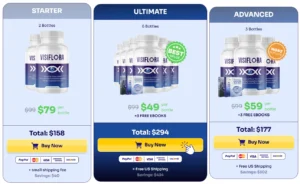
The supplied research reports approximately $49 to $79 per bottle depending on package size. A separate promotional page advertises $49 per bottle, but current pricing, discounts, shipping, and package terms should be confirmed at checkout.
Price information: Reported range: approximately $49-$79 per bottle; not independently verified as a current fixed price
Availability: Primarily available online through the current VisiFlora sales or checkout path. Amazon listings exist but are not clearly established as the official source. A 60-day money-back guarantee is advertised in supplied materials, subject to current checkout terms.

Frequently Asked Questions
What is VisiFlora?
VisiFlora is a multi-ingredient vision-support dietary supplement marketed for general eye wellness, visual comfort, antioxidant nutrition, and macular-pigment support.
How does VisiFlora work?
It is intended to provide carotenoids, vitamins, minerals, botanicals, and other nutrients associated with eye and antioxidant nutrition. Its gut-eye positioning is based on an emerging research concept, but the finished formula has not been independently verified as clinically effective.
What are the main VisiFlora ingredients?
The supplied sources name lutein, zeaxanthin, astaxanthin, lycopene, vitamin A or beta carotene, vitamins C and E, zinc, copper, selenium, chromium, bilberry, saffron, ginkgo biloba, grape seed extract, rutin, quercetin, eyebright, coleus forskohlii, taurine, and alpha lipoic acid.
Is VisiFlora really a 22-in-1 formula?
The product is marketed as 22-in-1, but the supplied ingredient pages appear to identify 21 individual ingredients. This discrepancy should be clarified by checking the current Supplement Facts panel.
Does VisiFlora improve eyesight?
That has not been independently established. Some ingredients have relevant nutritional research, but there is no supplied whole-formula clinical trial proving that VisiFlora reliably improves eyesight or treats an eye condition.
Can VisiFlora treat macular degeneration, glaucoma, cataracts, or diabetic eye disease?
No. VisiFlora is marketed as a dietary supplement and should not be used to treat, cure, or prevent diagnosed eye disease or to replace professional care.
How do you take VisiFlora?
The supplied product information describes one capsule daily with food. Always follow the current label because serving instructions can change.
Does VisiFlora have side effects?
Possible supplement-related effects may include digestive upset, headache, allergic reactions, or interactions involving specific ingredients. A reliable VisiFlora-specific side-effect rate is not independently verified.
Is VisiFlora safe with medications?
Safety depends on the person, medication, dose, and complete formula. Ask a healthcare professional before use if you take prescription medicine, particularly medication affecting bleeding, blood sugar, or blood pressure.
Where can I buy VisiFlora?
The product is primarily promoted through an online VisiFlora sales or checkout path. Confirm that the page is current, the seller is clearly identified, and the final order terms match the advertised product. Marketplace listings should be treated cautiously.
What is the VisiFlora price?
The supplied research reports approximately $49 to $79 per bottle depending on package size, but pricing and discounts can change. Confirm the final price, shipping, taxes, and any subscription terms at checkout.
Is VisiFlora a scam or legit?
The supplied materials identify VisiFlora as a marketed dietary supplement, but they do not independently validate all claims. It may be a real product while still having limited evidence for finished-product effectiveness. Buyers should verify the label, seller, refund terms, and checkout details.
Are VisiFlora before-and-after photos or real results verified?
No independently authenticated before-and-after evidence was supplied. Testimonials and claims about clarity, floaters, focus, or night vision should be treated as promotional or anecdotal unless supported by verifiable documentation.
Final Offer

Final Verdict
VisiFlora is worth investigating for adults who want a broad eye-wellness supplement and understand that its role is nutritional support rather than medical treatment. Its formula includes several familiar ingredients, especially lutein and zeaxanthin, but the lack of clear individual doses and the absence of an independently verified whole-formula clinical trial are meaningful limitations. The gut-eye concept is scientifically interesting, yet it should not be confused with proof that VisiFlora delivers specific vision results. Before you buy VisiFlora online, verify the current label, seller, final price, refund terms, and medication warnings. Overall, VisiFlora appears to be a real supplement product, but the evidence supports cautious consideration rather than confident claims that it works for everyone.
Research Sources
- VisiFlora Official Website and Product Information
— Used to verify the product category, stated positioning, general benefits, disclaimers, and formula categories. - About VisiFlora: Formula, Brand and Product Information
— Used for the capsule format, suggested use, online ordering information, ingredient groups, and advertised guarantee. - VisiFlora Ingredients: 22-in-1 Formula, Safety and Formula Details
— Used to identify the publicly named ingredients, formula-count discrepancy, safety caveats, and lack of clear dose transparency. - VisiFlora Benefits: Realistic Eye Wellness Support Explained
— Used to distinguish realistic nutritional-support benefits from disease-treatment claims. - VisiFlora Reviews: Can Your Gut Health Protect Your Vision?
— Used for the discussion of the gut-eye research concept, reported pricing, advertised guarantee, and explicit acknowledgment that a whole-formula clinical trial was not supplied. This page is labeled as paid press-release content. - VisiFlora Reviews 2026: Is It Worth Buying? Expert Analysis
— Used as a secondary source for the ingredient list and product positioning. Its review claims were treated as editorial or promotional content, not independent clinical proof. - VisiFlora Capsules Amazon Listing
— Used to note the marketplace listing, stated rating, seller or brand ambiguity, and shipping limitation. - VisiFlora Reviews and Complaints Discussion
— Used to identify the advertised 22-in-1 positioning and the distinction between product marketing claims and independently established evidence.
Important:
This article is for informational and consumer-research purposes.
Product claims, pricing, ingredients, availability and policies can change.
Always verify current information on the manufacturer’s or seller’s
official page before purchasing. Individual results can vary.